

The Limits of Paradise
Architecture, Faith, and Boundaries


“Discovering in wide landscape all the east of paradise and Eden’s happy plains…” - John Milton, Paradise Lost
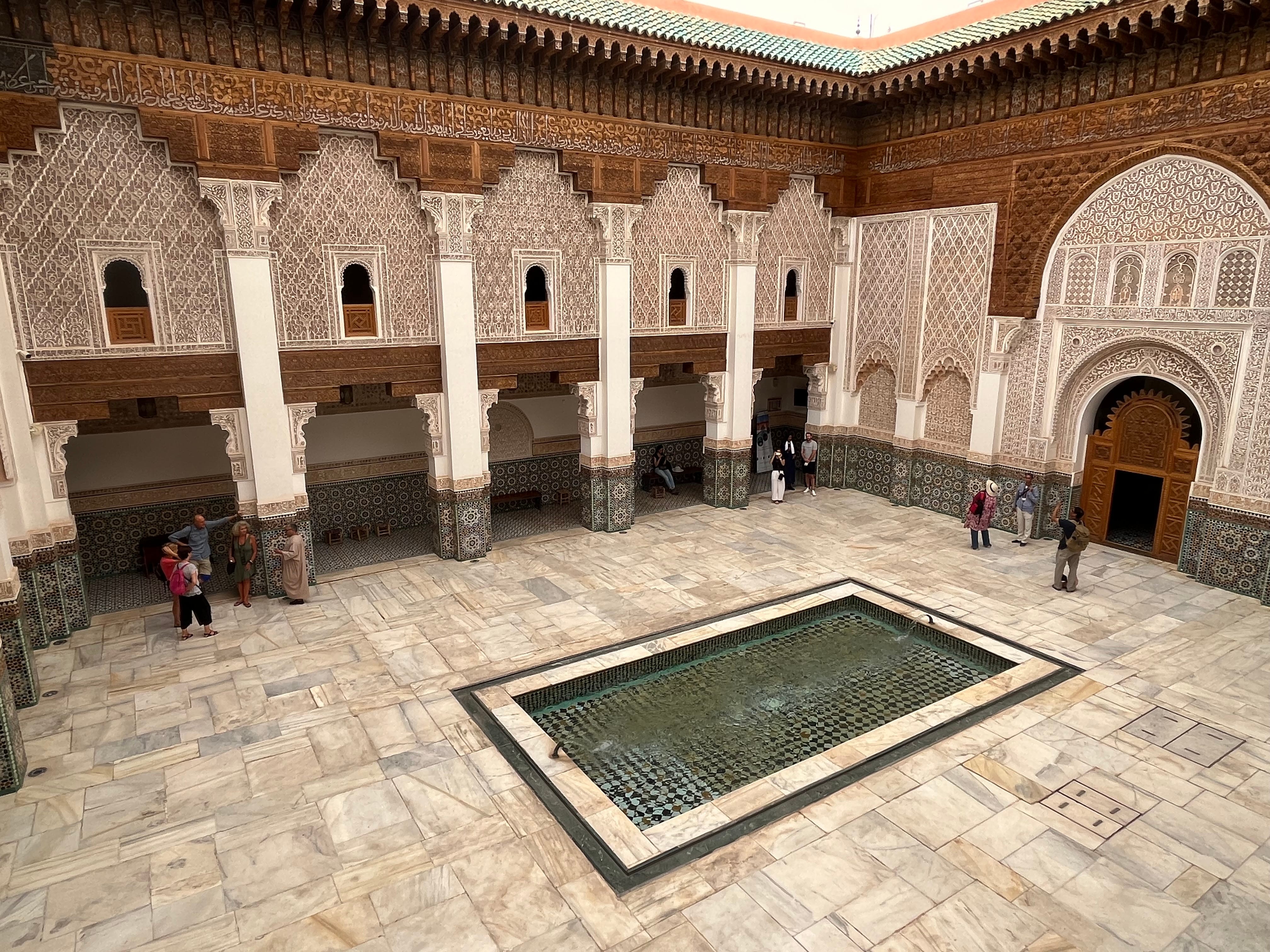
There is no other feature more emblematic of the architecture of old Andalus than that of the courtyard in its many varied iterations. Certainly the Umayyad Caliphate that conquered these old lands of the Vandals carried from their home base of Damascus their own rich architectural traditions of courtyard living. Nevertheless, the south of the Iberian peninsula were by no means virgin lands. While the atrium of the Roman domus or peristyle court of the Roman villa had fallen out of domestic favour together with the fall of the empire, the courtyard tradition persisted in the former lands of Hispania Ulterior until the time of the Muslim conquest as characterised by the atria of the Christian basilicae and the open-air garths of the cloistered monasteries. In both instances the enclosed courtyards of the Christians and Muslims offered more than practical benefits as they were likewise intended as material reflections of a shared divine archetype, an image of heaven on earth.
The Garden
“Allah hath promised to Believers, men and women, gardens under which rivers flow, to dwell therein, and beautiful mansions in gardens of everlasting bliss…” - The Qur’an 9:72
Both the Hebrew “gan” (גן) and the Arabic cognate “jannah” (جنّة), translated in English as “garden”, signify an enclosed, protected place. Similarly, the synonymous “paradise” finds its roots in the ancient Persian language of Avestan and literally means a place surrounded by a berm of walled earth. Such earthly garden paradises were man-made oases in a surrounding wilderness, quite lush places filled with bubbling fountains and fruitful orchards. In the opening dialogue of the Torah we find ourselves in a garden, one of divine making, the garden of Eden.
In the Judaic and Christian traditions this is most often thought of having been a physical place here on Earth. In slight contrast, the Islamic description of Eden with its rivers, fountains, and orchards is mere metaphor for an indescribable spiritual state that was at once both the origin and yet to be the final destination of mankind. Meanwhile, among all the Abrahamic faiths, religious belief became expressed architecturally with the courtyard as material symbol of the paradisaic ideal.
This article is a guest post contributed by Patrick Webb. He is a master plasterer, author of The Technological Society and Its Presence and former Professor of Plaster Working at the American College of the Building Arts in Charleston, South Carolina. If you’re someone who would be interested in reading more of his works, you can click the button below.
The Courtyard
“If you have a garden and a library you have everything you need.” - Cicero
When one walks among the streets and alleys of the old medinas al-Andalus and al-Magreb (North Africa) such as Cordoba, the Albaicin of Granada, Fes, Marrakesh, or Tunis, one immediately gets the feeling of inhabiting a hierarchical series of nested courtyards. In one sense the medina or city itself is such a walled, protected place. Contained within are many fanā’ (فناء), plazas that can be thought of as urban courtyards serving as protected places for market commerce and public celebration. Institutions such as mausoleums erected in honour of the medina’s founder, madrasas for education, and religious mosques each contained their own, often breathtakingly beautifully adorned ṣaḥn (صَحْن), arcaded courtyards serving as peaceful venues for ritual ablutions and prayer.
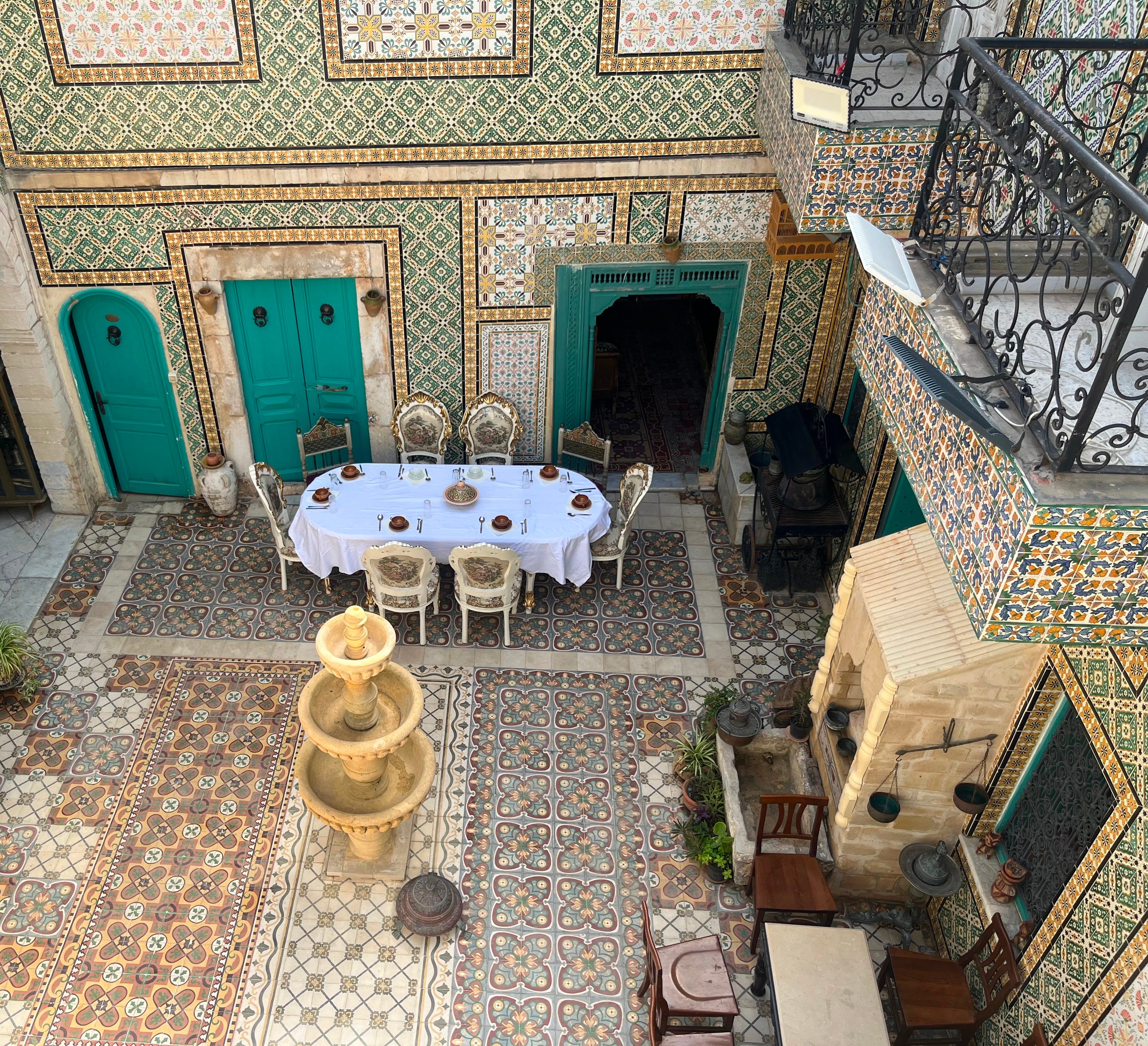
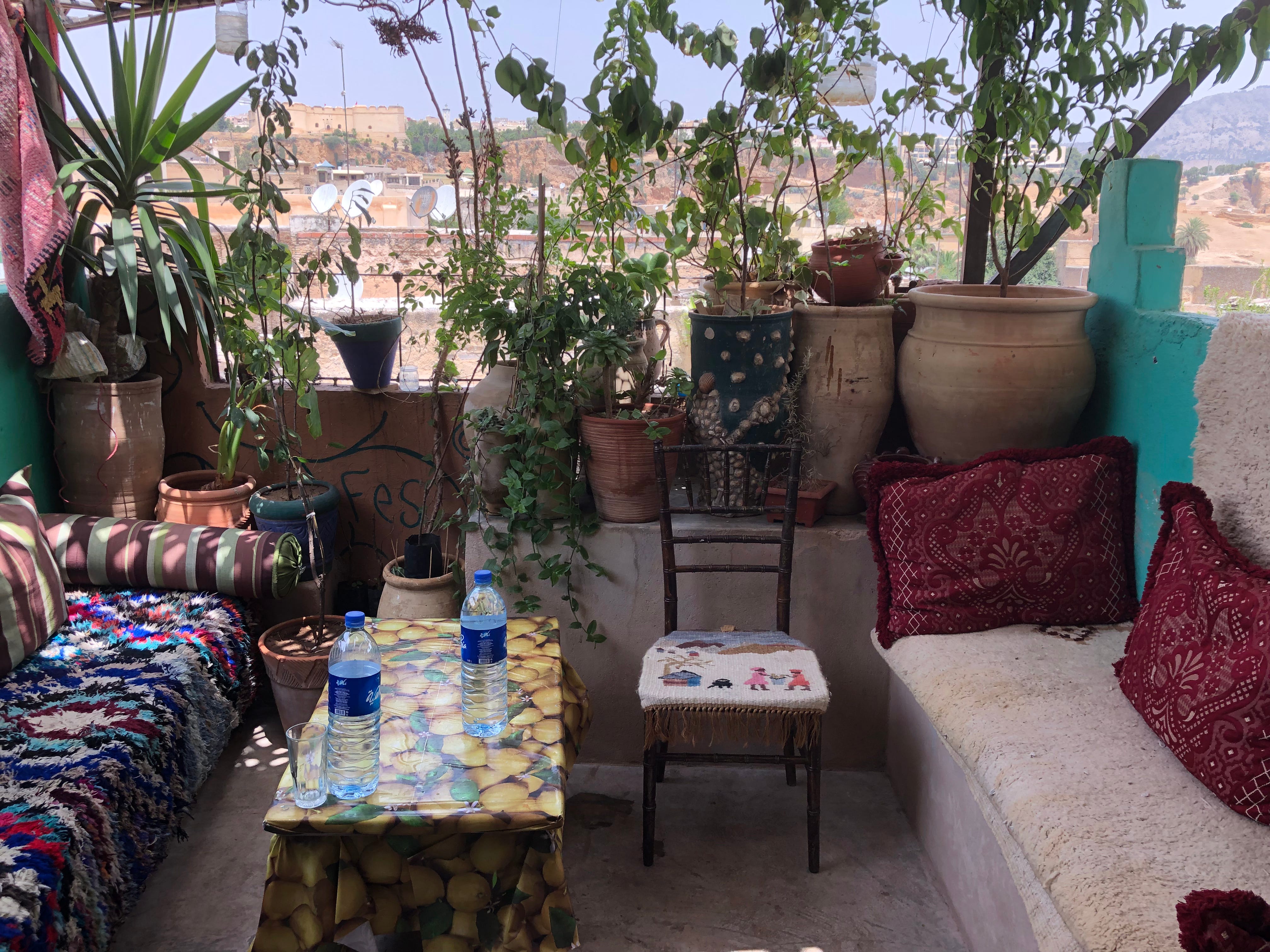
Courtyard architecture extended from the civic, public, and institutional realm into the domestic sphere. Large extended families or particularly prestigious ones constructed Riads (رياض), a word that literally means “meadow” but has come to signify a palace complex with a large central courtyard having one or more fountains supporting an orchard. However, even the more modest dār (دار), single family home, often had an open-air atrium with a central fountain, and lacking even this feature always made use of the roof which served as a saṭḥ (سطح), a sheltered rooftop courtyard protected by a parapet suitable for a variety of activities such as laundry, dining, and small gardens. This courtyard rooftop lifestyle continues to this day throughout North Africa and Andalusia.
The Boundary
In our aforementioned description of the original garden we have intrinsically associated the concept of limit. On the inside there is a realm of order which is enclosed, protected, walled. It is good. It is full of life. Outside of the garden isn’t evil per se, rather wild, chaotic, disordered. In the Genesis version of the story mankind is given a mandate. They are entrusted with this garden and tasked with extending the limits of Paradise, with converting a lifeless wasteland into habitable order.
In the same account a limit of a spiritual nature is imposed upon mankind. In both the Qur’an and Torah, Adam and Eve are forbidden from eating from a single tree. In the Hebrew account the tree was a symbol of divine omniscience, in the Islamic account, immortality. More importantly, what both accounts relate is the overstepping of a divine boundary.
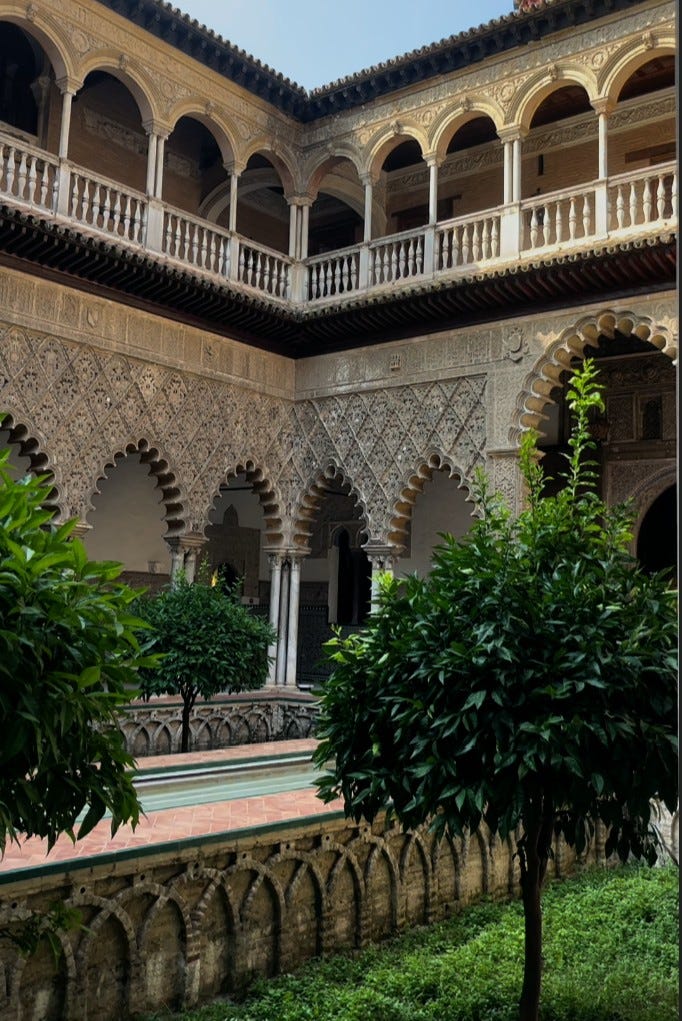
Today, places such as the Alhambra of Granada, the Alcazar of Seville, old sacred medinas such as Meknes and Kairouan are places of pilgrimage by people of every faith and walk of life. They persist as artefacts of a time when men remained cognizant of their responsibility, however imperfectly executed, to extend the limits of the garden, of engendering the conditions for life.
Such places stand out in high relief to the artefacts of Modern man, civilised man, rational man, who rather than replenish the earth has extracted from her resources to the point of depletion. To what end? Ugly, overcrowded cities. Agricultural wastelands. Decimated forests. Polluted oceans, lakes, and rivers. Mountains of industrial, digital waste.
These are not the actions of a gardener but of someone driven by the pride of man who sees no limit but himself, seeking to explode every natural limit of knowledge, of accumulated wealth, of power. Someone who views limits and boundaries as nothing more than forms of oppression, someone who views paradise as a prison. The final frontier of this psychosis may very well be to overcome the tyranny of our own biology with ever more resources directed towards a transhumanist future: to escape this earth, finally freed from our decaying flesh, consciousness uploaded into an omniscient cloud, immortality thus assured.
I often am asked, “Why can’t we make beautiful places like we used to?” Oh, but we can. The earth can flourish in our presence, be even more capable of supporting life because we are an active participant, we tend to her. The secret lies in the courtyard, in the garden. Respect the limit. Cultivate more life, go tend to your garden, extend the limits of Paradise.
.
 | A guest post by
|