
Defining 'Moorish'
Tracing the origins of a misunderstood term

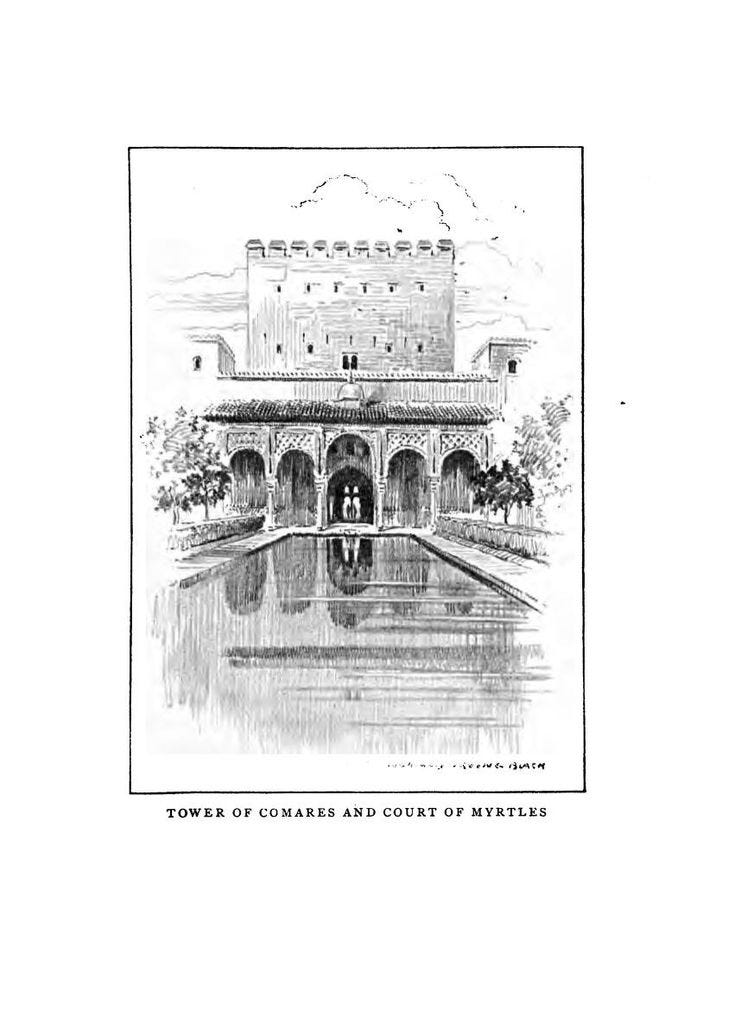
“On the opposite side of the valley of the Darro is the rugged cliff crowned by the Alhambra... The delicate and airy forms of its towers and arcades rising above the groves of orange, citron, and pomegranate... The whole has an air of Oriental romance.”
This is Washington Irving, standing in Granada in 1829, trying to describe what he’s seeing. He reaches for words like “Oriental,” “delicate,” “romance” because he doesn’t have the language for what this architecture actually is. He’s encountering something his own architectural vocabulary can’t contain.
What Irving saw and what he struggled to name was what we now generally call “Moorish” architecture. But that term, like Irving’s description, can sometimes carry more confusion than clarity.
Now the word “Moor” actually comes from the Latin ‘Mauri’, referring to the inhabitants of Mauretania, a Roman province in North Africa. By the medieval period, Europeans used “Moor” broadly to describe Muslim inhabitants of the Iberian Peninsula and North Africa, regardless of their actual ethnic or geographic origins. It was never a term these people used for themselves.
The term spread even further beyond Iberia and North Africa. Europeans applied "Moor" to Muslim populations across vast distances: the Tamil Muslims of Sri Lanka became "Ceylon Moors," the Muslim peoples of the southern Philippines became "Moros," and various groups across the Indian Ocean trading world were labeled "Moors" by Portuguese, Dutch, and British colonizers. The word had become entirely detached from any specific ethnicity, geography, or culture — it simply meant "Muslim" filtered through a colonial lens. This linguistic sprawl shows just how imprecise the term always was, used more to categorize and than to describe.
The Umayyads who built the Mezquita of Córdoba, the Almoravids and Almohads who shaped Seville, the Zirids and Nasrids who built and transformed the Alhambra each had similar yet distinct architectural languages, political structures, and cultural priorities. “Moorish” flattens all of that into a single exotic category.
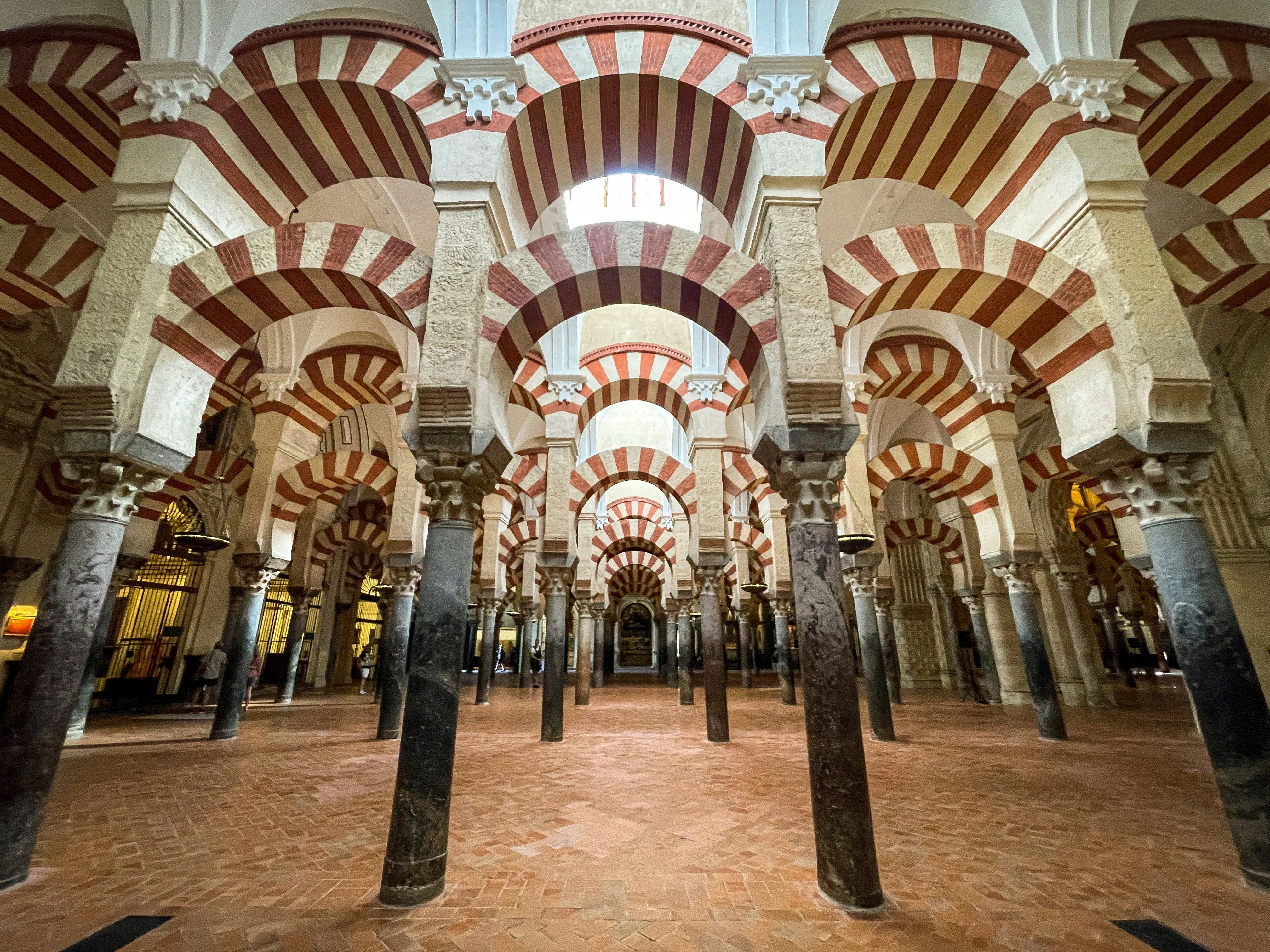
But the term stuck, and by the 19th century, when Irving arrived in Granada, “Moorish” had become the European shorthand for an entire aesthetic tradition: horseshoe arches, intricate tilework, courtyards centered around fountains, and surfaces covered in geometric patterns and Arabic calligraphy.
The thing is that calling it “Moorish” tells you more about European perception than about the architecture itself.
So what is Moorish architecture, beyond the label?
At its core, it’s an integrated system, not a style that can be borrowed piecemeal, but a philosophy of how buildings should relate to climate, water, light, and daily life.
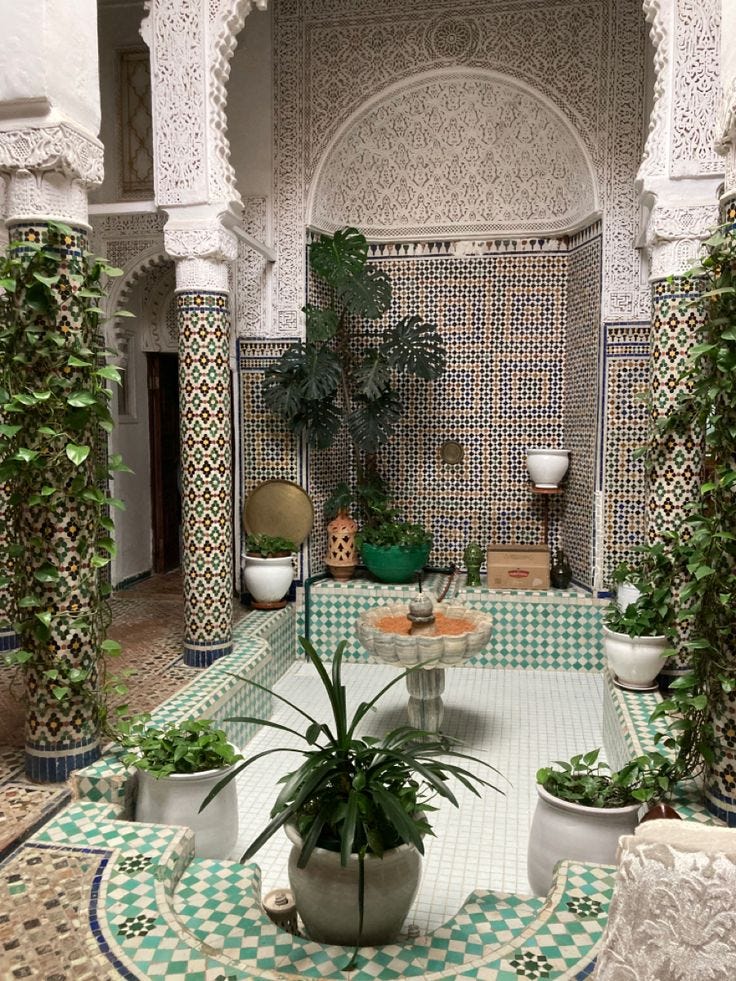
Start with the courtyard. In a riad, in the Alhambra, in nearly every significant Moorish building, the courtyard is the organizing principle. Everything radiates from this central void: rooms, galleries, circulation paths. The courtyard is the structural anchor. Cools air, regulates light, creates threshold between public and private life.
Water is the same. Those fountains and channels are for beauty but also for climate control. Moving water cools air, humidifies space, and creates sound that masks street noise.
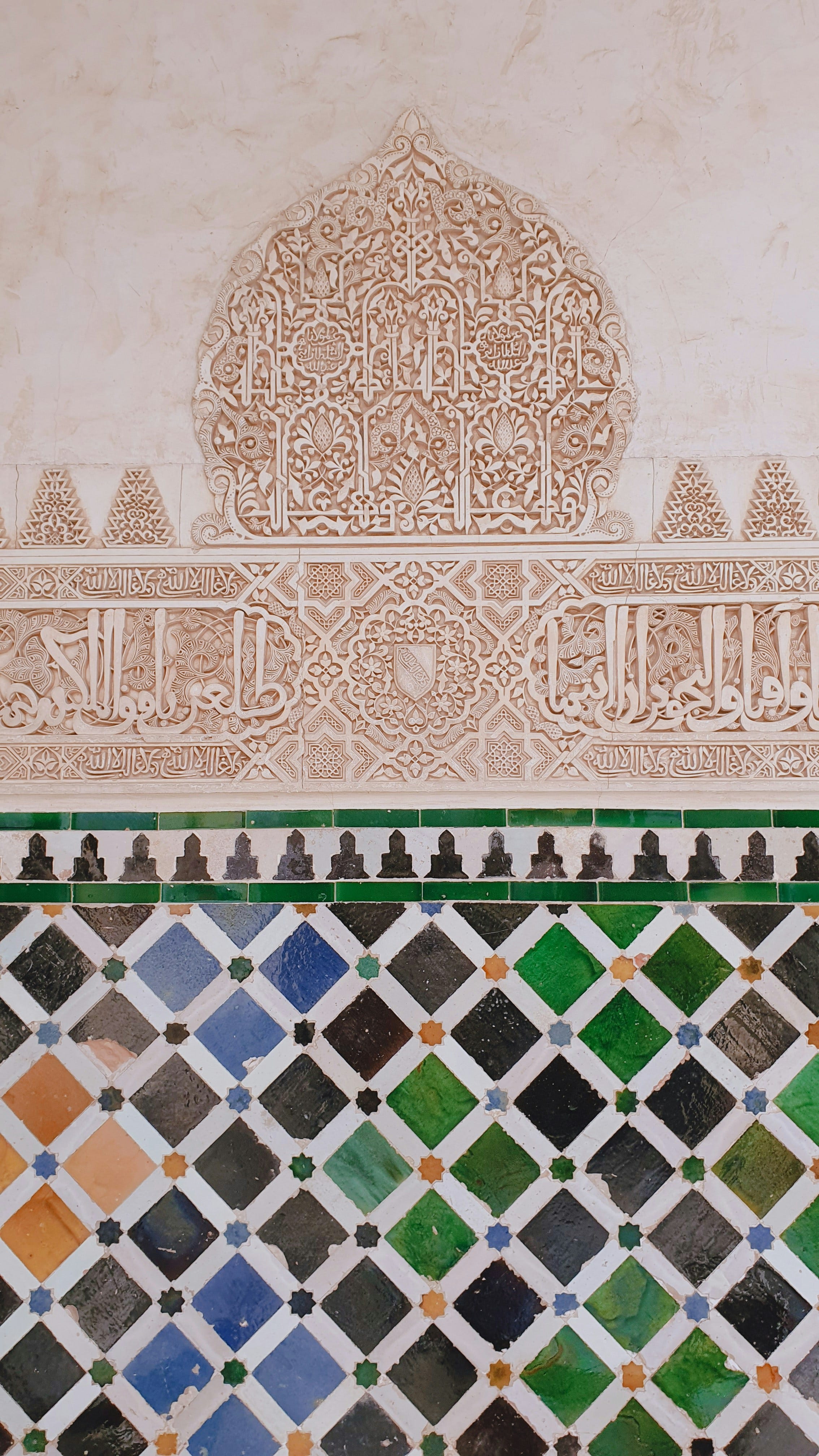
Then comes ornament. Zellij tilework covering the lower walls. Muqarnas vaulting at transitional points. Carved Arabesque. Calligraphy. To the average, untrained eye, this looks like decoration. But its also a way of articulating space, creating texture, and inscribing meaning into the building itself.
Islamic tradition prohibits figurative representation in religious contexts, so ornamentation became geometric and calligraphic. Patterns repeat infinitely, suggesting the infinite nature of creation. Qur’anic verses are carved into walls, turning the architecture into a form of devotion. The ornament sort of becomes the building’s language, it’s way of expressing.
“Moorish” didn’t stay confined to al-Andalus. It branched out, adapted, and transformed, much like Gothic architecture, reaching across centuries and continents.
The first variant of Moorish architecture was Mudéjar — the architecture of Christian Spain that borrowed Moorish techniques after the Reconquista. When Christian kings took over Seville, they didn’t demolish the Alcázar. They expanded it, using Moorish craftsmen and Moorish methods. Horseshoe arches appeared in churches. Azulejo (zellij) tiles covered Christian palaces. The form remained, even as the function shifted.
Mudéjar is hybrid architecture: Sort of like Christian in purpose, Moorish in execution. It shows how deeply embedded these techniques were. So practical and beautiful, that even conquering forces couldn’t abandon them.
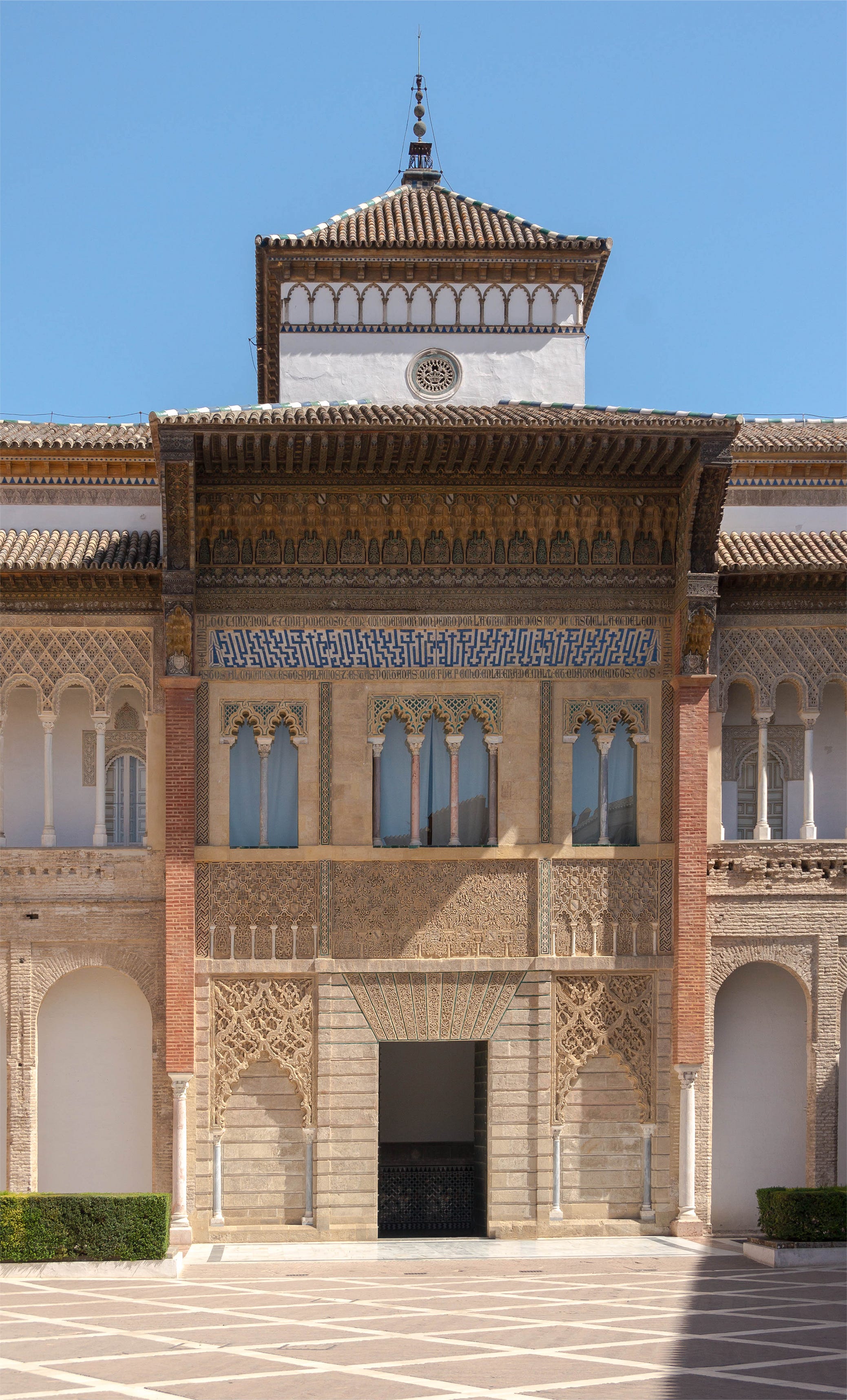
In the 19th century, Spain saw the rise of Neo-Mudéjar, a deliberate revival of the medieval Mudéjar tradition. As Spain industrialized and cities expanded rapidly, architects looked to their own architectural history for a national style. Neo-Mudéjar became the language of infrastructure: railway stations, bullrings, marketplaces, factories, and civic buildings across Spain adopted the brick construction, horseshoe arches, and geometric patterning of the original Mudéjar.
Unlike the original Mudéjar, which emerged organically from Christian patrons working with Muslim craftsmen — Neo-Mudéjar was self-conscious revival. It was the Iberian peninsula more so in Spain claiming its layered history as identity. The style remained practical: brick was cheap, local, and well-understood by Spanish builders. But also symbolic, marking these new industrial and civic structures as distinctly Spanish rather than generically European.
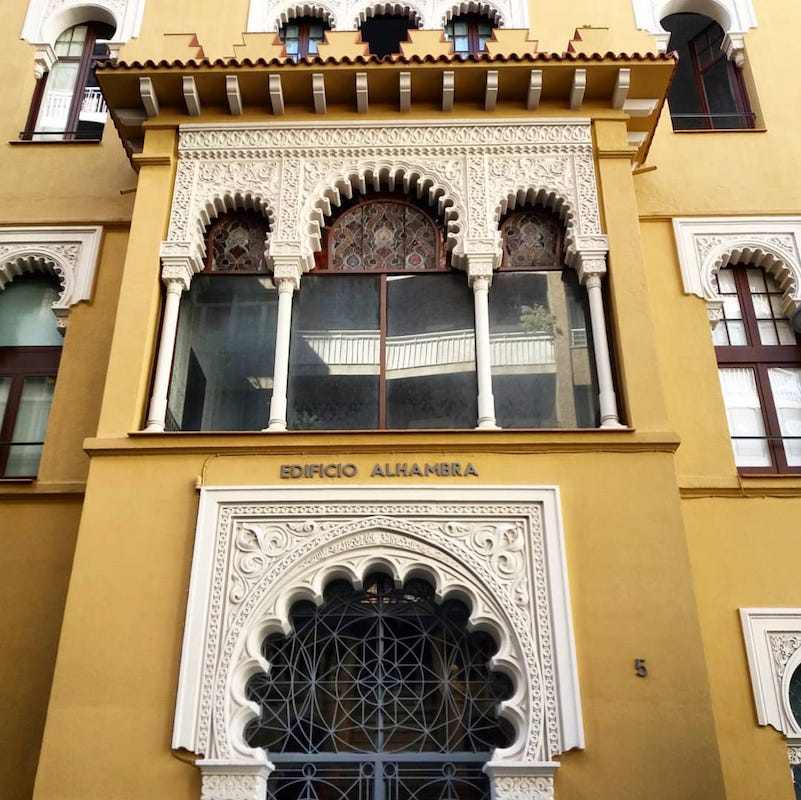
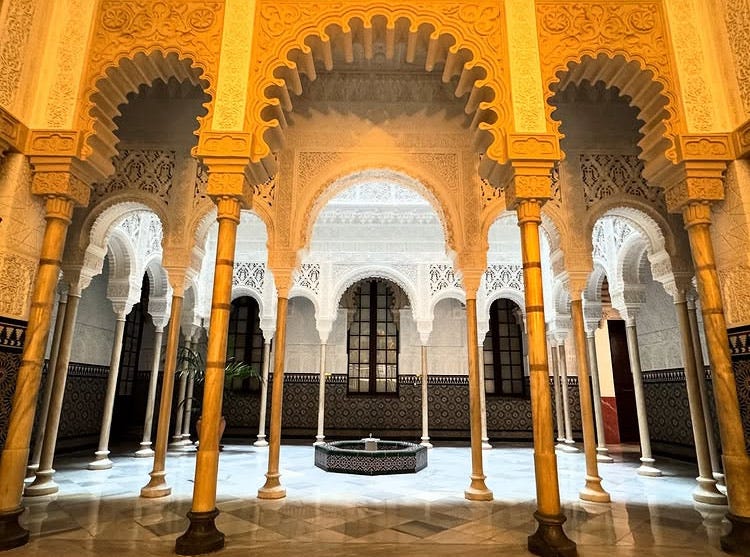
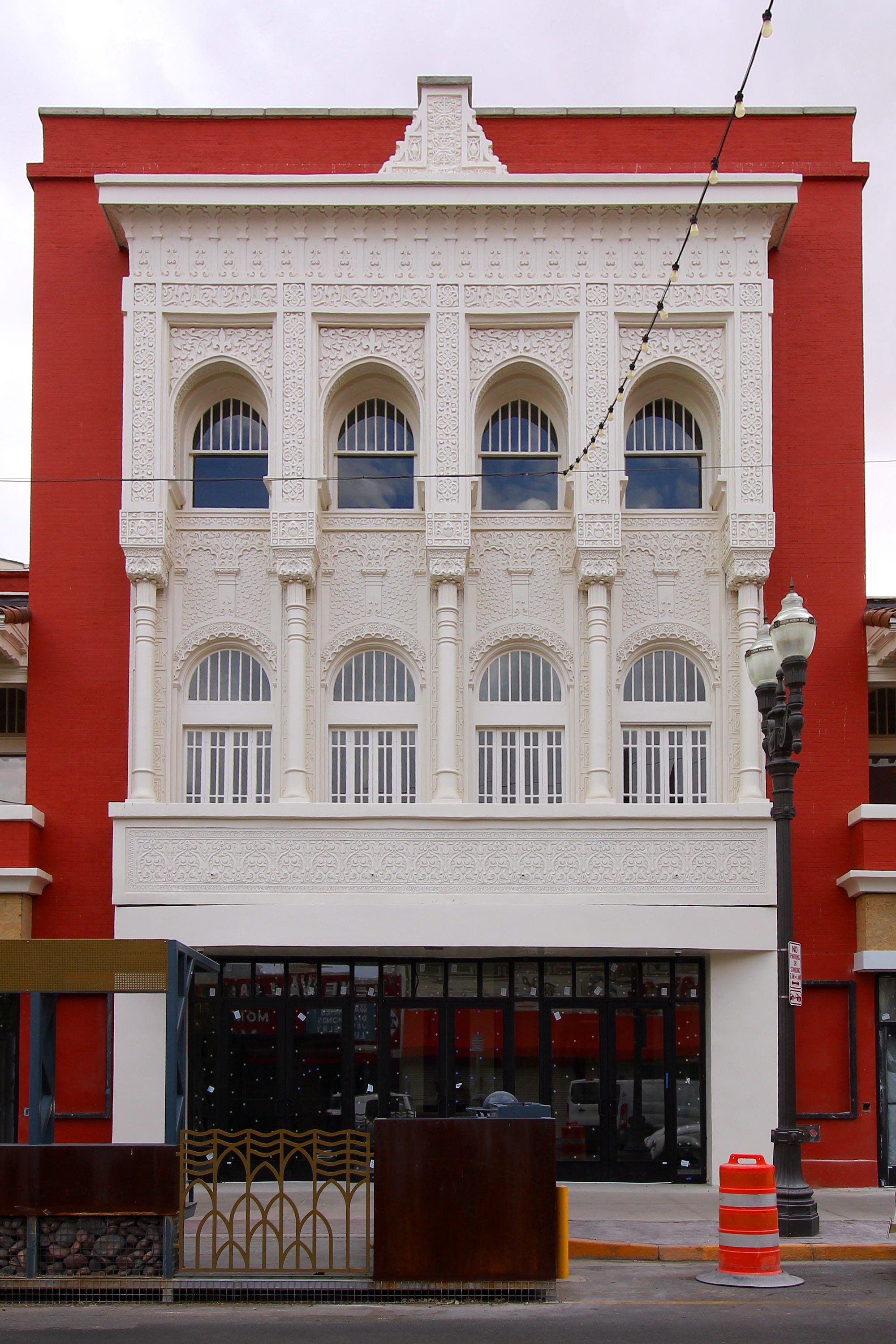
Then came Neo-Moorish, the broader European and American fascination with "Oriental" architecture. As Romanticism swept beyond Spain, architects across Europe and the United States became captivated by the exotic architecture of the East. Moorish elements appeared in casinos, theaters, and world exposition halls from New York to Barcelona to Paris.
The Neo-Moorish movement shows both the endurance of Moorish architecture and its alteration.
A Curated List of Moorish Architecture
If you want to understand what “Moorish” actually means, start here:
Original Moorish-Andalusian
Mezquita of Córdoba (786–988) – The great mosque, with its forest of columns and double-tiered arches. Expanded over two centuries, it represents Umayyad architectural ambition.
Alhambra, Granada (1238–1358) – The Zirid fortress later turned into a palace-city by the Nasrids. Court of the Lions, Hall of the Ambassadors, Generalife gardens. The most complete surviving example of Nasrid architecture.
Mudéjar:
San Salvador, Teruel (14th century) – A Christian church built in Mudéjar style, with a brick minaret-like tower and intricate patterns and geometric brickwork.
Palacio de Pedro I, Seville (14th century) – Part of the Alcázar complex. Christian royal palace built entirely in Moorish style.
Neo-Mudéjar:
Plaza de Toros de las Ventas, Madrid (1929) – Madrid’s grand bullring, with elaborate brick horseshoe arches and ceramic tile decoration throughout.
Toledo Railway Station (1919) – Railway station featuring Neo-Mudéjar brick facade, horseshoe and multifold blind arcades, and decorative geometric patterns.
Neo-Moorish Revival:
The Bains Dunkerquois, Dunkirk, France (1895) – Public bath house distinguished by its decorated façade with arabesque patterns, horseshoe arches all around and an onion dome.
Villa Zorayda, Florida, USA (1883) – A historic house museum that features many intricate details like calligraphy, carved plasterwork, zellij tilework.
There are far more examples of each type than listed here, but these buildings demonstrate the most prominent and legible features of their respective traditions — enough to understand the principles at work. The Maghreb (North Africa) particularly Morocco, Algeria, and Tunisia offer equally rich examples, where these traditions continued unbroken into the present.
To conclude, the term “Moorish” persists because we still don’t have a better one. It’s imperfect, reductive, tangled up in Orientalism and colonial nostalgia. But it’s also the word that preserved these buildings in European imagination, the word that inspired revivals, the word that kept the vocabulary alive.
A Note on the Work Behind This
These are not just abstract ideas to me.
They are part of how I see the world. They shape the way I think about space, pace, and what makes a home feel like it remembers something deeper.
They are what guided the process behind something I made for others who feel the same way.
📖 Designing the Neo-Moorish Home
This is a 56-page visual and written guide on Moorish design for modern spaces.
It includes:
Core design principles rooted in Moorish-Andalusian tradition
Practical suggestions and layout ideas
Visual references and moodboards
A calm, intentional approach to creating beauty through atmosphere and meaning
The guide is for those who want more than just style. It is for people who are seeking feeling, presence, and a quiet elegance in their spaces.
You can find it here at a discounted price of just $8.50 (only available till March 10): https://ahmednaseem.gumroad.com/l/neo-moorish-home/2000SUBS
Thank you for reading.
Whether you come for the the ideas, or the quiet philosophy behind it all, I’m truly grateful.
Until next Friday,
The Andalusian Edit
Thanks for the explanation of Moor/Moorish and its descriptive inadequacy. Also the history of Moorish architecture from its origins through the Mudejar variations.
thoroughly enjoyed this. thank you for sharing this knowledge